Everything you need to build AI agents that can actually be trusted.
Security, permissions, tool calling, APIs, MCP, authentication, coding agents, and observability — organized into one practical research hub.
Explore the stack
AI agent topics
AI Agent Security
Protect agents, tools, credentials, data, and execution environments.
Explore topicAgent Permissions
Design least-privilege access and approval boundaries for autonomous agents.
Explore topicTool Calling
Understand how agents safely call APIs, databases, browsers, and external tools.
Explore topicAgent APIs
Build reliable APIs and interfaces for agents that need to take actions.
Explore topicMCP
Connect models to tools and data without turning every integration into a security hole.
Explore topicAgent Authentication
Use OAuth, JWTs, short-lived credentials, and service identities correctly.
Explore topicAI Coding Agents
Understand coding agents, repository access, sandboxes, and developer workstation risk.
Explore topicAgent Observability
Trace tool calls, decisions, failures, approvals, and costs across agent runs.
Explore topicThe latest AI agent research
New articles across the entire agent stack, not a six-card sample. Keep scrolling to explore the growing library.

AI Coding Is Getting Faster. The Next Bottleneck Is Quality
AI coding agents are taking on larger engineering tasks.

OpenAI Dots Push AI Toward Always-On Software
OpenAI’s September 29 DevDay points to a new product direction for indie software.
Best AI Tools for Indie Founders in 2026
The practical AI stack for research, coding, product work, content, and automation when you are building with a small team.

Snorkel AI Raises $350M as Training Data Becomes Core Infrastructure for AI Agents
The data startup is expanding from labeling tools into finished datasets and reinforcement-learning environments for frontier AI systems.

Ema Raises $77M as AI Employees Move From Pilots Into Enterprise Workflows
The enterprise AI startup is betting that companies will buy completed work, not another layer of software.

Lovable Crosses $600M Run-Rate as AI App Building Moves Into the Enterprise
Lovable says its annualized revenue has passed $600 million, highlighting how conversational app-building is expanding from experiments by individual developers into enterprise software workflows.

Ando Raises $20M to Build Team Messaging Around AI Agents
Ando has emerged from stealth with a messaging platform designed to make AI agents first-class participants in workplace conversations rather than add-on bots.

Docker Cloud Sandboxes Change Where Long-Running AI Coding Work Happens
Docker is moving its microVM-based agent sandbox from the laptop to managed cloud compute, giving developers a way to leave long-running coding tasks running after the laptop closes.

ByteAsk Is Betting on Specialized AI Coding Agents for C and C++
A new $1 million-backed startup is targeting reliability-heavy software where generic coding copilots face harder constraints.

Ando Emerges: Agent-Native Messaging That Treats AI as Teammates, Not Bots
Ando raised $20M and launched a Slack alternative where agents get identities, inboxes, and the right to join conversations without being tagged — a practical signal for indie founders building agent-heavy teams.

Morning Briefing: Desktop AI Agents Land and Indie Founders Keep Shipping
Cua-style agents control apps without hijacking the mouse, Meta Muse keeps climbing charts, and a fresh wave of micro-tools hit InventList. Here’s what solo builders should watch today.

OpenAI Agents API in Public Beta: The Solo Founder Playbook for Managed Cloud Agents
OpenAI shipped the Agents API on September 10 with the Codex harness, hosted sandboxes, and multi-agent support — here is how an indie team should adopt it this week without rebuilding infrastructure.

Meta Muse Hits Amazon’s Wall: What Agentic Commerce Means for Solo Founders
Amazon blocked Meta’s viral Muse agent from shopping. Indie teams now need explicit agent identity, opt-in APIs, and fallback paths—not silent browser automation.
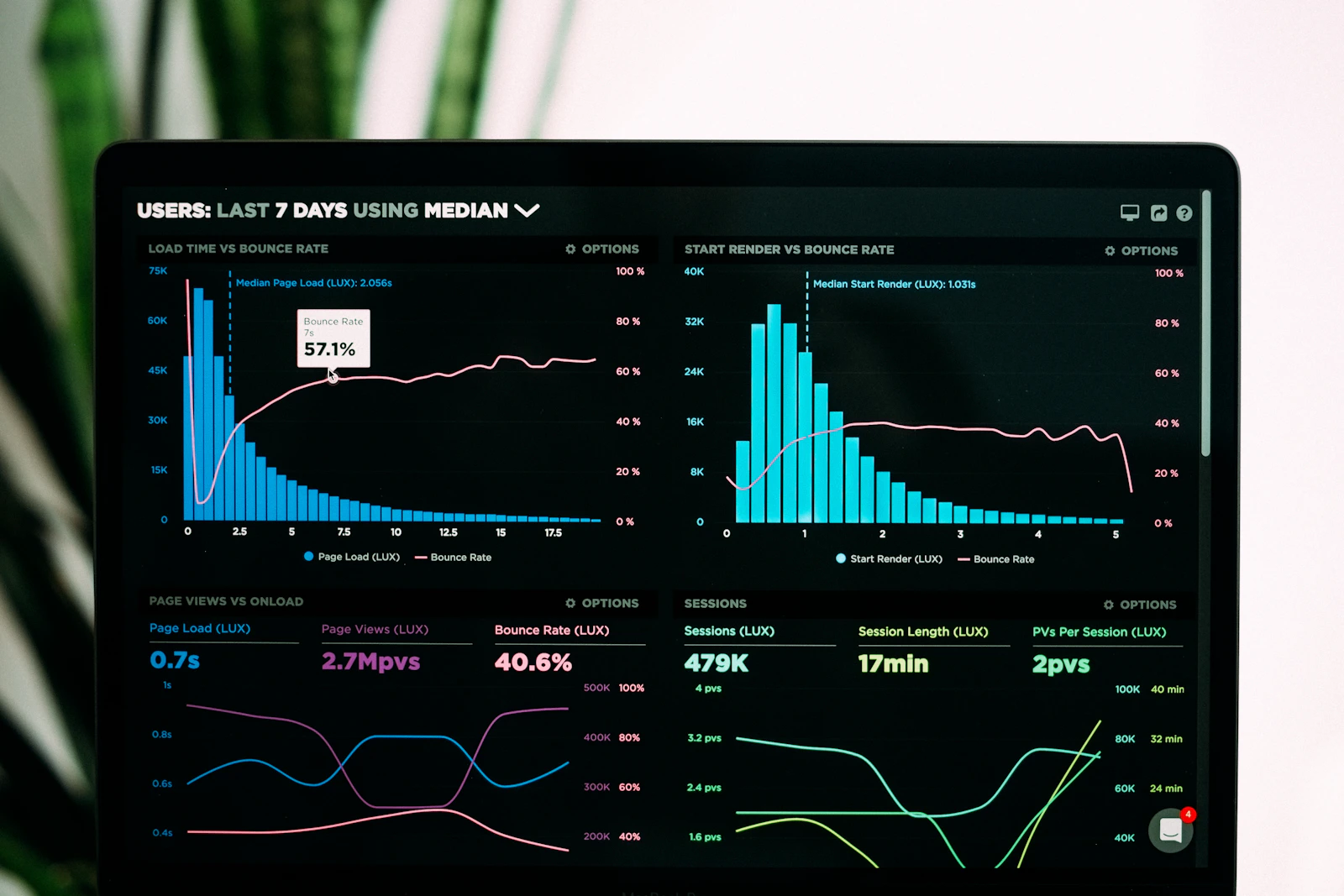
GitHub Copilot OpenTelemetry Arrives: Agent Observability Playbook for Indie Founders
On September 22 GitHub enabled managed OpenTelemetry export for Copilot agents. Solo builders finally get the same session traces enterprises already use—here is how to apply it to your micro-SaaS agents this week.

Next.js 16 & Turbopack: Building and Shipping Micro-SaaS at Lightning Speed
How modern web tooling unlocks unprecedented iteration speed for solo developers building complex software.

The Solo Founder Playbook: Bootstrapping a Micro-SaaS to $50K MRR with AI Agents
How modern indie hackers are replacing traditional 10-person teams with autonomous workflows, lean stacks, and targeted customer acquisition.

Claude Opus 5.5 Dropped Yesterday: The Solo Founder Playbook for a Cheaper Frontier Model
Anthropic shipped Opus 5.5 on September 22 with Fable-class agentic coding, $4/$20 token pricing, and cache reads at $0.20 — here is how an indie team should switch this week.

Grok 4.7 Landed September 21: A Builder’s Read on Speed, Voice, and Cost
xAI shipped Grok 4.7 a day before the Anthropic and OpenAI price cuts. Pair it with Grok Voice Transcribe 2.0 only where latency beats another 2% on a coding bench.

GPT-6 Sol and Luna Cut API Prices in Half: What a Micro-SaaS Should Route Where
OpenAI shipped Sol and Luna on September 22 at 50% of GPT-5.6 rates. Here is the routing table for a bootstrapped product that cannot put Astra on every request.

Gemini 3.8 Live Makes Voice Agents Cheap Enough for a Solo Support Desk
Google’s September speech-to-speech models claim 97 languages and async tool calls. That is a product feature if you sell to people who will not type a ticket.

Xiaomi Open-Sourced MiMo-V2.6: A Cloud-Cost Exit for Builders Tired of API Tax
MiMo-V2.6-Pro and Flash landed MIT-licensed on September 22 with a public RL stack. That is a self-host option, not a reason to abandon managed APIs tomorrow.

Qwen3.8-Omni-Flash: 1M Context for Builders Who Hate Brittle RAG
Alibaba’s mid-September omni model takes text, image, audio, and video and answers in text with a 1M-token window. Useful if your agent is still a pile of chunkers.
SaaS Security When Your Agent Can Use the Computer
Frontier models now click, type, and open shells. The security checklist for a solo shop is secrets, scopes, and a kill switch — not a PDF policy.
AI Agent Tracing: How to Design End-to-End Agent Traces
A useful trace should explain what an agent did, why it did it, and where the workflow spent time.
AI Agent Session Replay: How to Debug Multi-Step Agent Runs
Multi-step agent failures are difficult to reproduce because the final error often hides the earlier decision that caused it.
AI Agent Production Dashboards: What to Monitor After Launch
A production dashboard should answer whether agents are working, becoming expensive, getting slower, or creating risk.
AI Agent Latency Monitoring: How to Find Slow Agent Workflows
Agent latency is distributed across model calls, tools, queues, databases, and external APIs.
AI Agent Failure Classification: How to Debug Production Runs
Not every failed agent run has the same cause.
AI Agent Evaluation Metrics: How to Measure Production Quality
Successful HTTP requests do not prove that an agent completed the right task.
AI Agent Cost Observability: How to Attribute Spending Per Workflow
Agent cost is difficult to control when model calls and external services are not tied to individual workflows.
AI Agent Alerting: How to Build Useful Production Alerts
Alerting every time an agent fails creates noise and teaches teams to ignore monitoring.
AI Coding Agent Test Gates: How to Stop Broken Code From Shipping
Fast code generation makes automated verification more important, not less.
AI Coding Agent Secret Protection: How to Stop Credential Leaks
Agents can read files, logs, environment variables, and command output where secrets may appear.
AI Coding Agent Sandboxing: How to Isolate Agent-Generated Code
Coding agents can execute commands, install packages, inspect files, and run applications.
AI Coding Agent Rollback Strategy: How to Recover From Bad Agent Changes
Even well-tested agent changes can fail in production because tests cannot cover every environment and dependency interaction.
AI Coding Agent Deployment Permissions: How to Control Production Releases
Allowing an agent to deploy code turns a coding assistant into a production operator.
Build safely
Agents turn software permissions into actions.
A model can choose tools, arguments, and next steps. IndieFounder focuses on the layer that makes those actions safe: permissions, credentials, isolation, approvals, APIs, and observability.
Check your agentKeep exploring
FAQ
AI agent basics
What is an AI agent?
An AI agent is software that can reason about a goal, choose actions, use tools, and continue until the task is complete or an approval boundary stops it.
Why does agent security matter?
Agents can combine model-generated decisions with real permissions. A compromised prompt, unsafe tool, leaked credential, or overly broad permission can therefore create real-world impact.
What is least privilege for an AI agent?
Give the agent only the tools, data, actions, and scope it needs for the current task, preferably with short-lived credentials and explicit approval for high-impact operations.
Should agents have production credentials?
Avoid long-lived, broad production credentials. Prefer isolated environments, scoped identities, short-lived tokens, and human approval for destructive or irreversible actions.