GitHub Copilot OpenTelemetry Arrives: Agent Observability Playbook for Indie Founders
On September 22 GitHub enabled managed OpenTelemetry export for Copilot agents. Solo builders finally get the same session traces enterprises already use—here is how to apply it to your micro-SaaS agents this week.
 Kirtesh··9 min read·1,061 words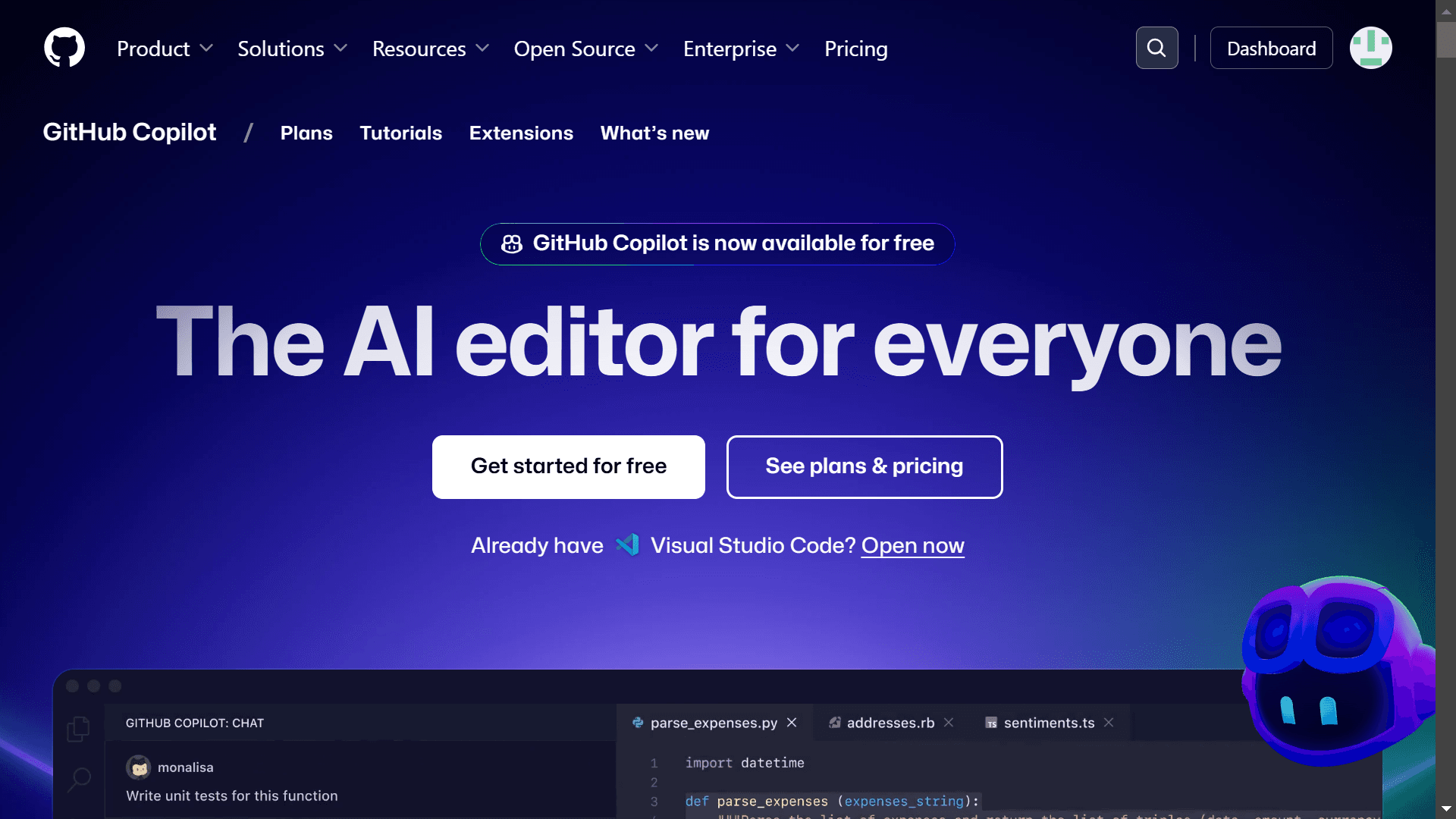
Image: GitHub Copilot
GitHub shipped OpenTelemetry support in the Copilot app so teams can follow model calls, tool use, and agent sessions in their own backends. For indie founders shipping AI agents, this is the signal that observability is no longer optional infrastructure.
GitHub enabled OpenTelemetry export for the Copilot app on September 22, 2026. Enterprise admins can now push agent session traces—model calls, tool invocations, and step order—into any OTLP-compatible backend without asking every developer to configure it themselves. Prompt and response content stays off by default.
For indie founders the headline is not the enterprise setting. It is the quiet confirmation that agent observability has become table stakes. If you ship coding agents, research agents, or customer-facing agent features, you need the same visibility GitHub just standardized for its own product.
Why agent observability suddenly matters for solo teams
Most micro-SaaS agents fail in ways that logs never capture. A long-running research agent calls the wrong tool, burns tokens on a dead end, recovers silently, and still returns a plausible answer. Your customer sees a result. You see a bill. You have no tree of what actually happened.
OpenTelemetry turns that opaque loop into a span tree. Each model call, each tool execution, each sub-agent handoff becomes a node with latency, token counts, and status. The same pattern that enterprises use for distributed systems now applies to the agent loop.
GitHub’s change closes the last client gap. VS Code, the CLI, and JetBrains already supported managed OTel. The standalone Copilot app now does too. The signal to independent builders is clear: treat every agent run as a traceable unit of work, not a black-box API call.
What GitHub actually shipped
| Capability | Detail | Indie relevance |
|---|---|---|
| Managed settings | telemetry block in enterprise managed-settings.json |
Central control if you ever sell to teams |
| Trace content | Session flow, model requests, tool use | Debug multi-step agents without screenshots |
| Defaults | Prompts and responses excluded | Safer starting point for customer data |
| Export | Any OTLP endpoint | Works with Jaeger, Grafana, SigNoz, Honeycomb, OpenObserve |
The documentation emphasizes three uses: follow the flow of a session, investigate unexpected behavior step by step, and apply telemetry settings across teams instead of per developer. Solo founders can ignore the “across teams” part and still benefit from the first two.
If you already use the Copilot SDK, the client accepts a TelemetryConfig with an otlpEndpoint. That path is available today for anyone building on top of Copilot rather than only consuming the chat UI.
A practical checklist for instrumenting your own agents
You do not need GitHub’s enterprise plan to adopt the same ideas. Apply the OpenTelemetry GenAI semantic conventions to whatever stack you run—OpenAI Agents API, Anthropic, LangGraph, or a custom loop.
- Emit a root span for every user-triggered agent session
- Nest
chatspans for each model call withgen_ai.request.modeland token attributes - Nest
execute_toolspans for every tool invocation, including latency and status - Propagate W3C Trace Context so sub-agents share the same trace
- Keep prompt and completion capture off by default; enable only in staging
- Export to a cheap OTLP collector (local Jaeger or a free-tier cloud) before you pay for a full platform
- Attribute cost per session using input/output token counts from day one
That list is enough to answer the three questions that actually matter when something breaks: which tool ran, how many tokens did it burn, and did the agent recover or just hide the failure.
How this intersects with SEO and agent commerce trends
Evening X conversations this week keep circling the same shift. Shoppers may soon tell an agent “find the best Christmas outfit under £40” instead of clicking through search results. Sellers who only optimize for human SERPs will lose to those who make their catalogs, policies, and structured data readable by agents.
Observability is the flip side of that coin. If agents are choosing products, you also need to see how your agents choose tools, data sources, and next steps. The same OpenTelemetry trees that help GitHub debug Copilot will help you debug why your research agent recommended the wrong competitor or why your outbound agent skipped a high-intent lead.
Indie builders who already publish build-in-public metrics should add one more chart: median agent session cost and success rate. That number will matter more than vanity MRR screenshots once customers start asking how reliable the automation is.
Cost and privacy realities for bootstrapped stacks
Token telemetry is free once you instrument; content capture is not free of risk. GitHub defaults to excluding prompts and responses for a reason. Customer support tickets, internal docs, and API keys can leak into spans if you flip the switch carelessly.
Start with metadata only—model name, token counts, tool names, status codes, durations. Add content capture in a private environment when you need to reproduce a specific failure. Rotate any keys that ever appear in a trace, and never ship a production collector that stores raw prompts without encryption and retention limits.
On the cost side, a local collector or a free-tier OTLP backend is sufficient for the first thousand sessions. Once you have volume, the same backends that already ingest your application traces can absorb agent spans without a second vendor.
What to ship before the weekend
Pick the single longest-running agent in your product or internal ops. Add a root span and child spans for model and tool calls following the GenAI conventions. Export to a local Jaeger or the free tier of any OTLP service. Run ten real sessions and open the trace trees.
You will almost certainly discover a tool that fails more often than you thought, a model call that dominates the token budget, or a recovery path that never fires. Fix the first of those issues. Then decide whether the next feature is more agent autonomy or more visibility into the autonomy you already have.
GitHub’s September 22 change did not invent agent observability. It simply made the standard impossible to ignore. Indie founders who treat every agent run as a first-class, traceable unit of work will ship more reliable products and sleep better when the next model update changes tool-calling behavior overnight.
The tooling is ready. The only remaining question is whether your next agent session will leave a useful trail or another silent bill.
Written by
Kirtesh
Founder
Kirtesh is a software engineer, indie hacker, and tech analyst writing on bootstrapped micro-SaaS, autonomous AI agents, cloud architectures, and the mechanics of building profitable software businesses.